
Showing 12 results
Center of Mass Finder
Place and drag masses on a 2D canvas to calculate the center of mass in real time. Visualize how mass distribution affects the balance point of a system of particles.
Momentum & Impulse Lab
Simulate elastic and perfectly inelastic collisions. Adjust masses and velocities to verify conservation of momentum and compare kinetic energy before and after impact.
Torque & Rotational Equilibrium
Balance a beam by adjusting masses, distances, and pivot point. Visualize clockwise and counterclockwise torques and observe rotational equilibrium conditions in real time.
Simple Harmonic Motion Explorer
Animate a spring-mass system in SHM with real-time x(t), v(t), a(t) graphs. Adjust amplitude, mass, and spring constant to see how period, frequency, and energy change.
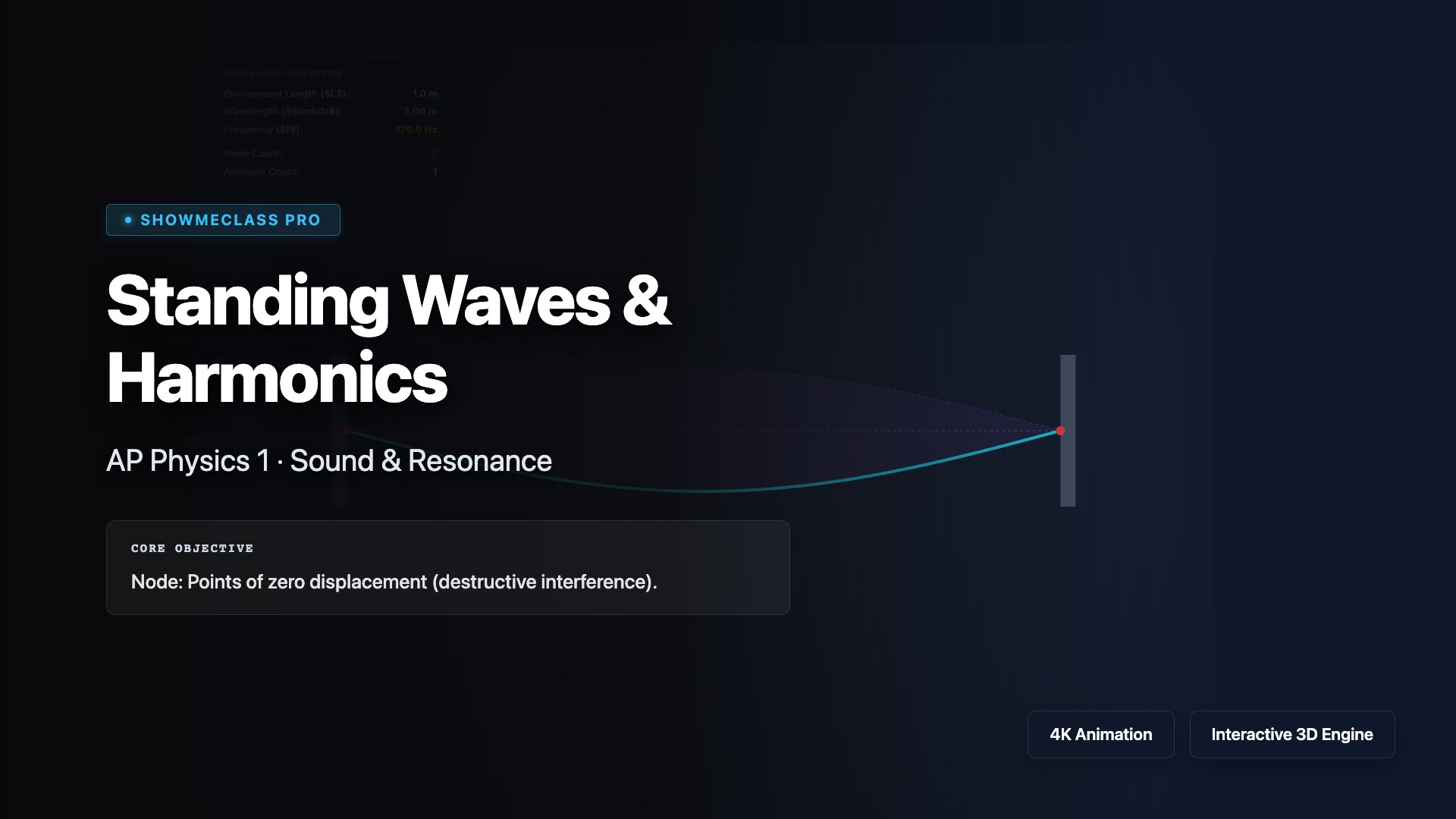
Standing Waves Generator
Visualize standing wave harmonics on a fixed string. Adjust harmonic number, amplitude, and wave speed to see nodes, antinodes, wavelength, and frequency in real time.
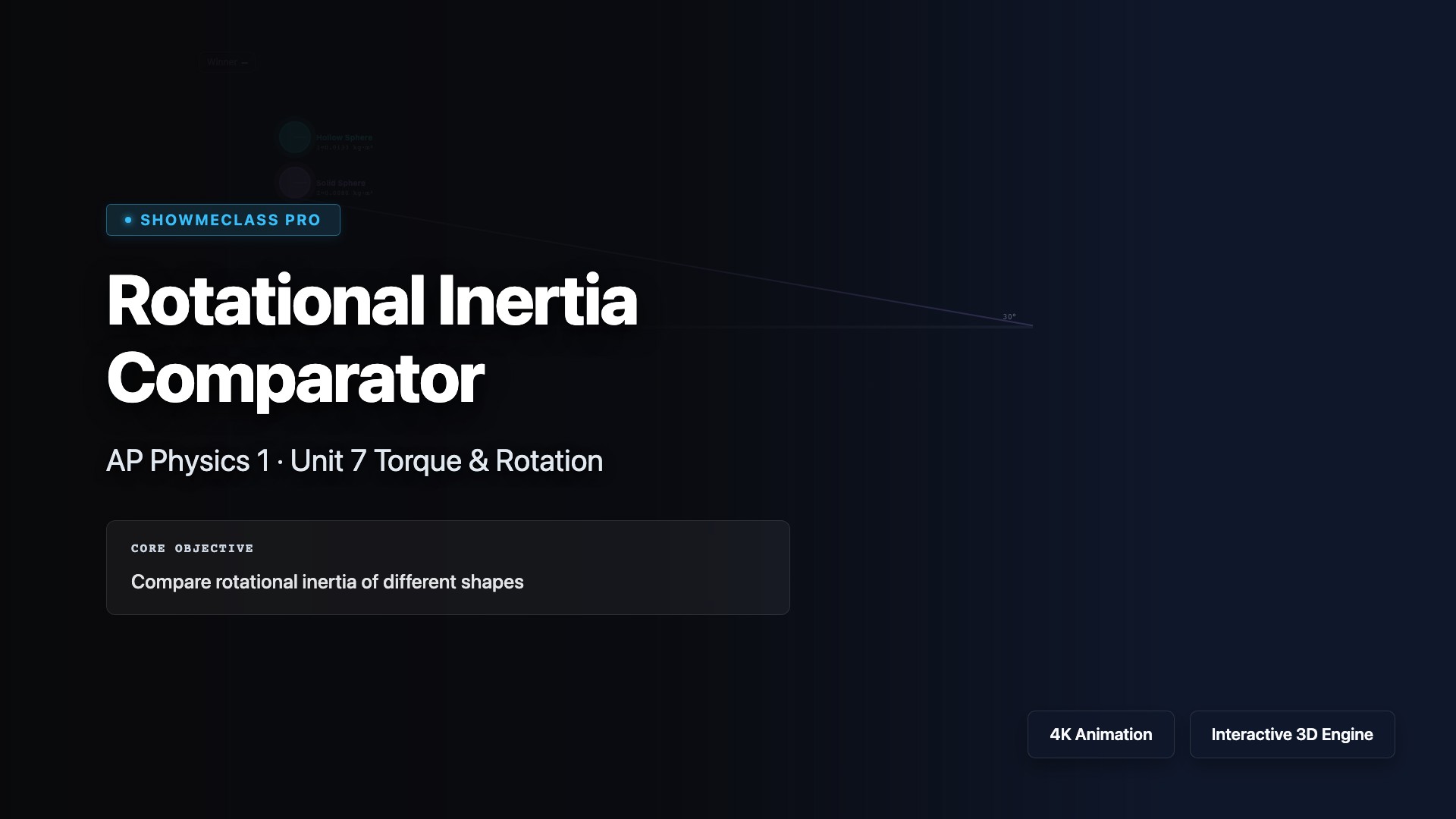
Rotational Inertia Comparator
Race shapes down a ramp to see which arrives first. Compare rotational inertia of solid/hollow spheres, cylinders, and rods. Understand how I/(mR²) determines rolling acceleration.
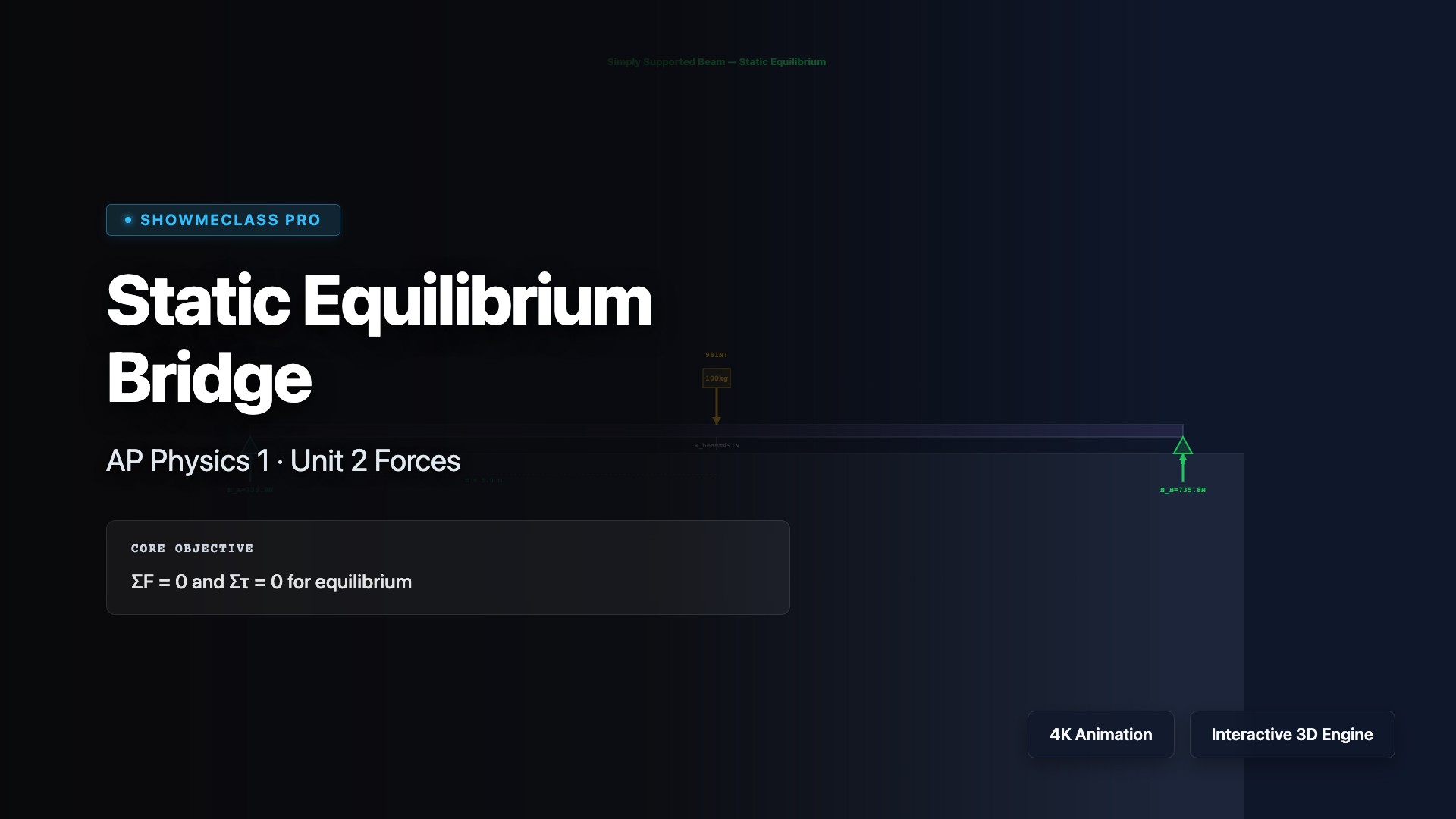
Static Equilibrium Bridge Builder
Analyze a simply supported beam with movable load. Calculate support reactions NA and NB using ΣF=0 and Στ=0 equilibrium conditions.
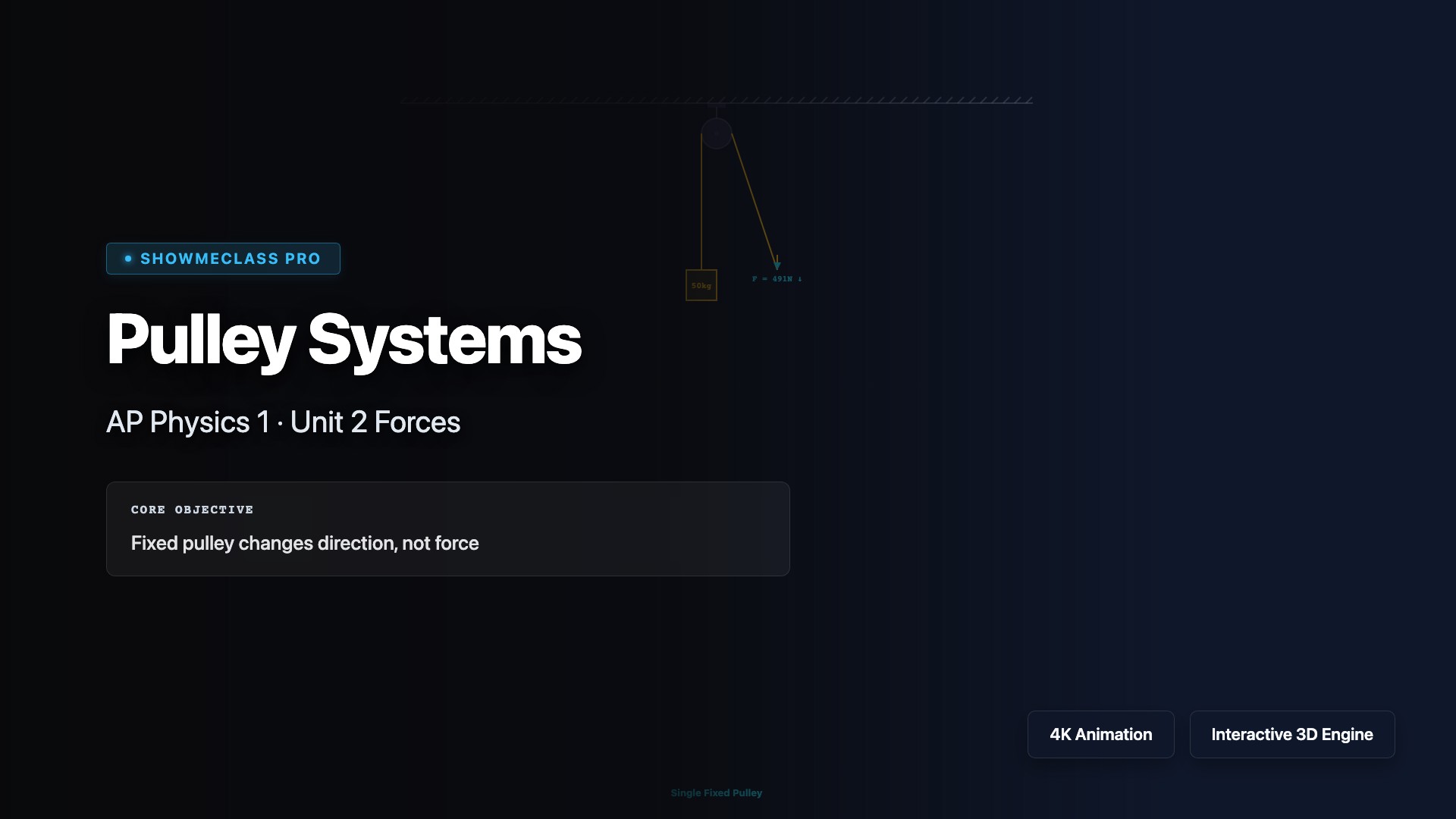
Pulley Systems & Mechanical Advantage
Compare 4 pulley configurations: single fixed, single movable, compound, and block & tackle. See how mechanical advantage trades force for distance.
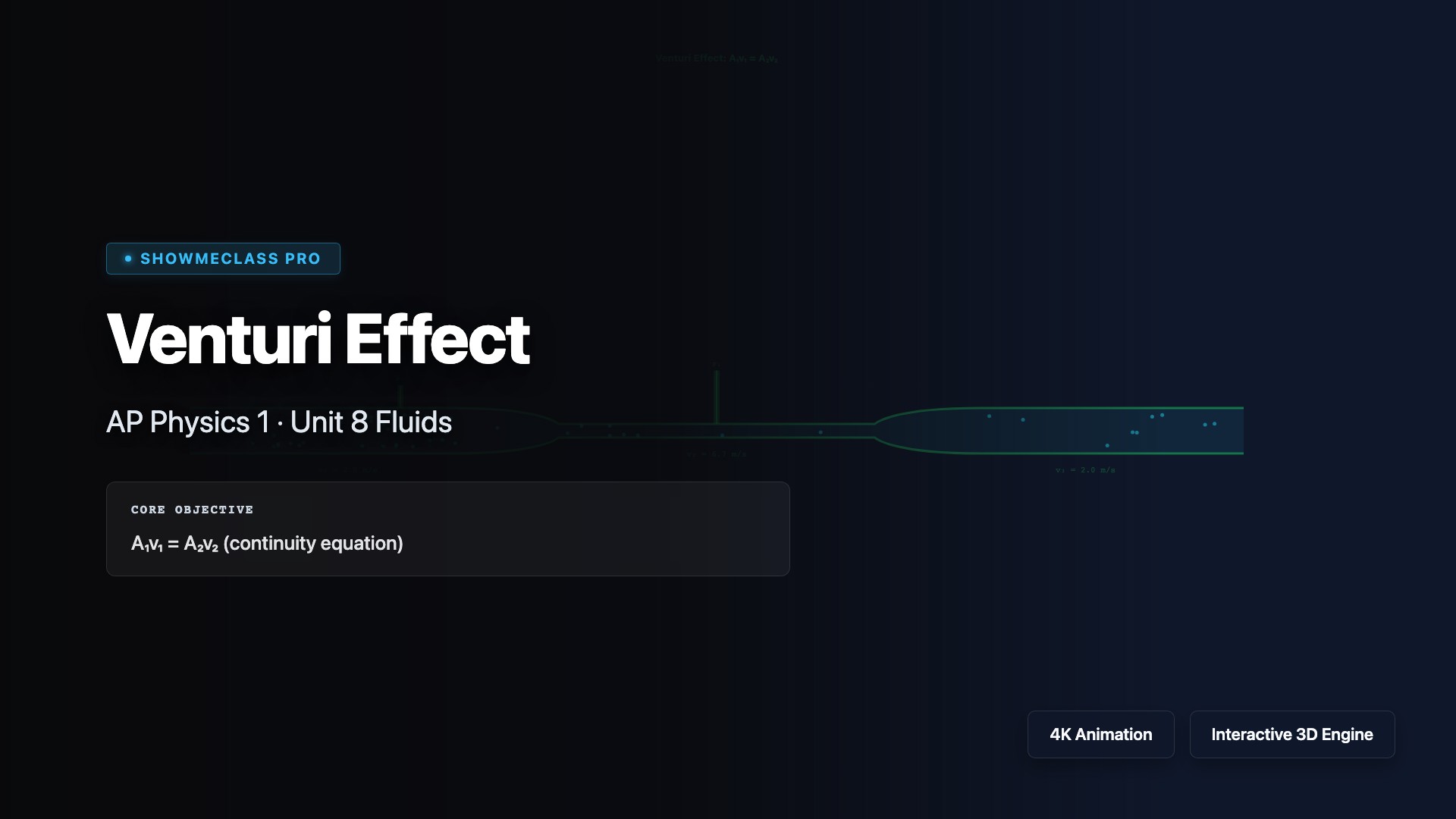
Venturi Effect & Flow Speed
Animated Venturi tube with flowing particles. A₁v₁ = A₂v₂ continuity equation and Bernoulli pressure drop visualization with manometer tubes.
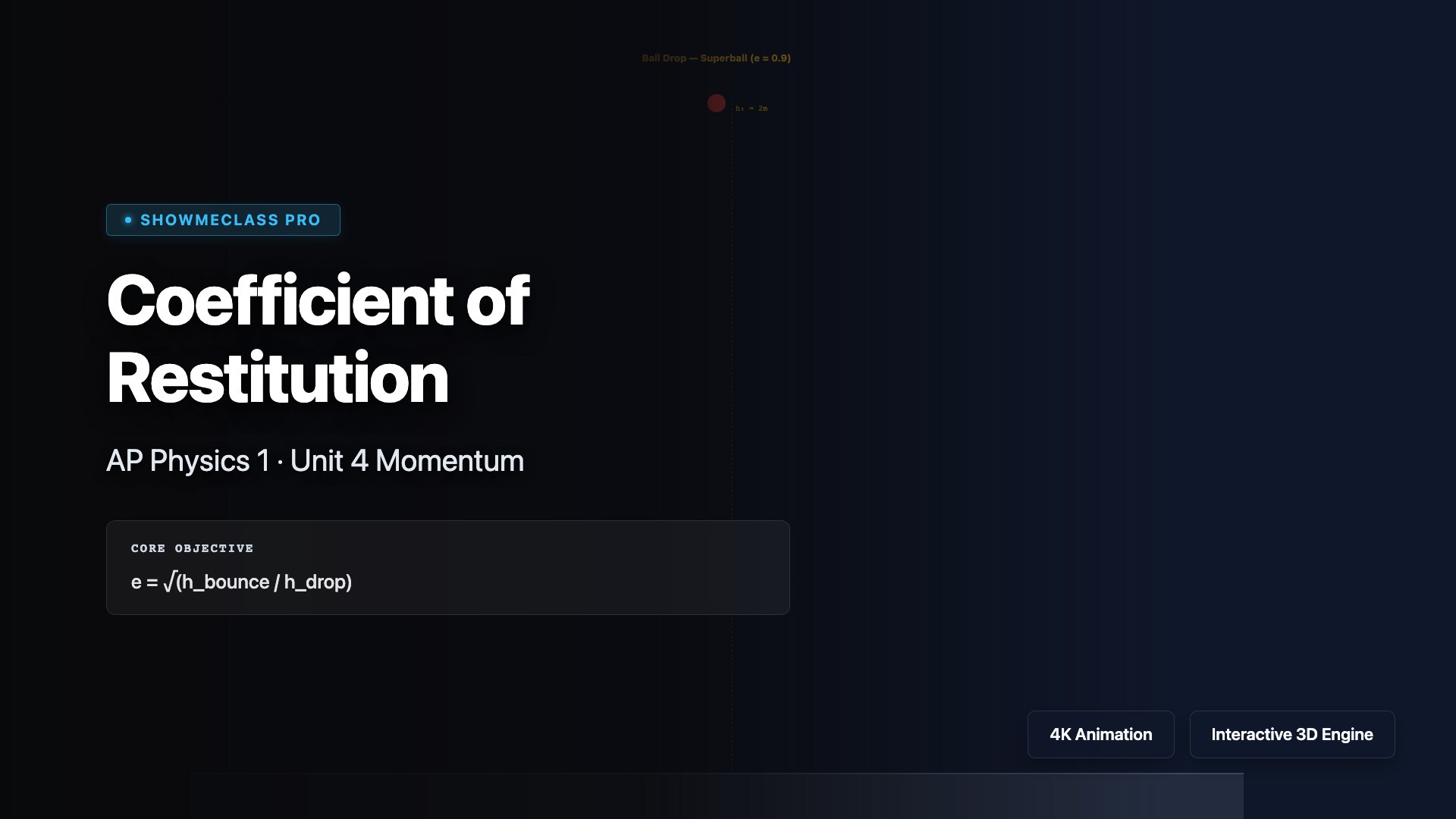
Coefficient of Restitution Lab
Drop balls of 6 materials (superball to clay) and measure bounce height to calculate e = √(h_bounce/h_drop). Compare energy lost per bounce.
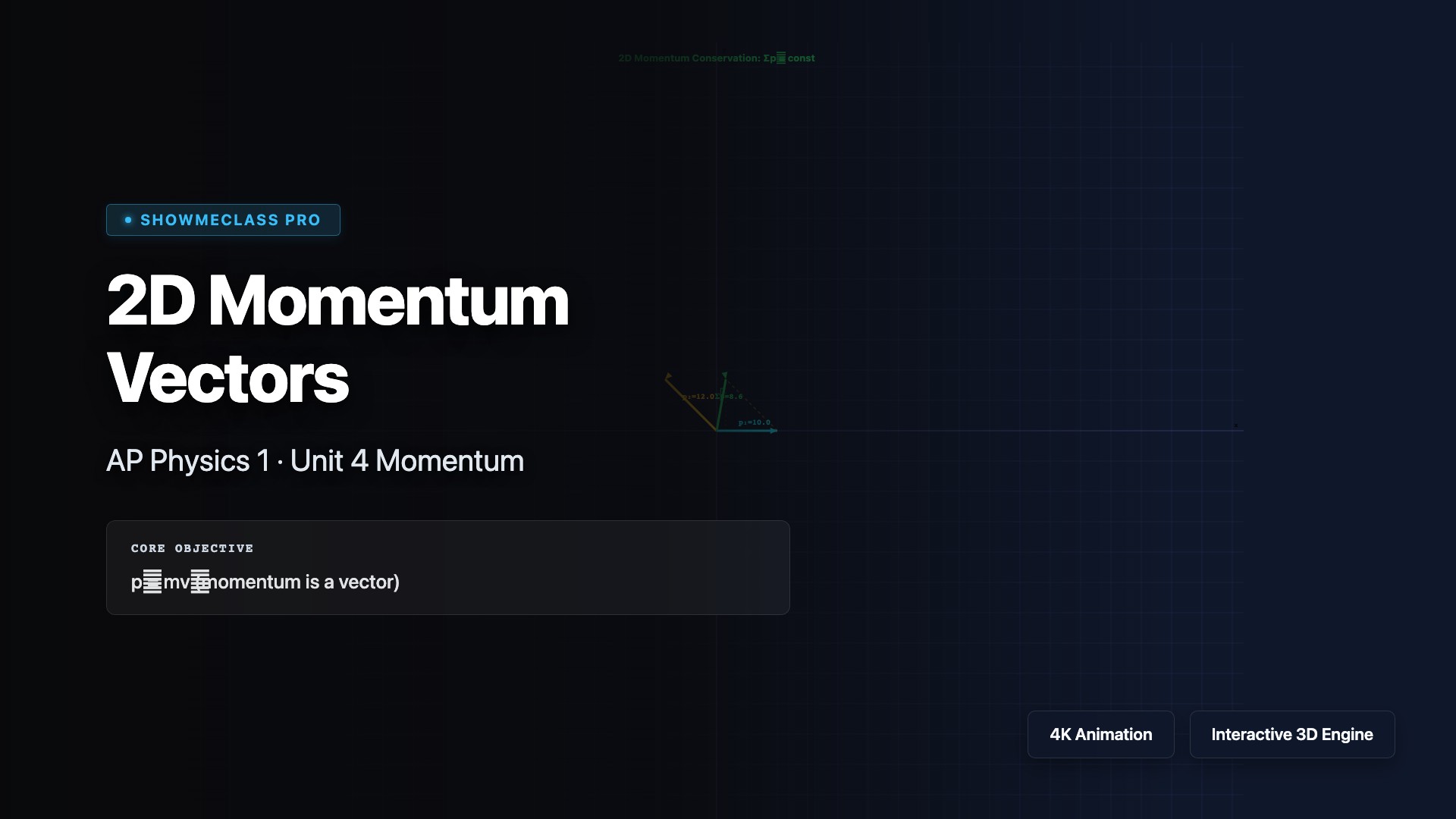
2D Momentum Vector Addition
Adjust mass, speed, and angle of two objects to see 2D momentum vector addition. Tail-to-tip method shows total momentum conservation with x/y components.
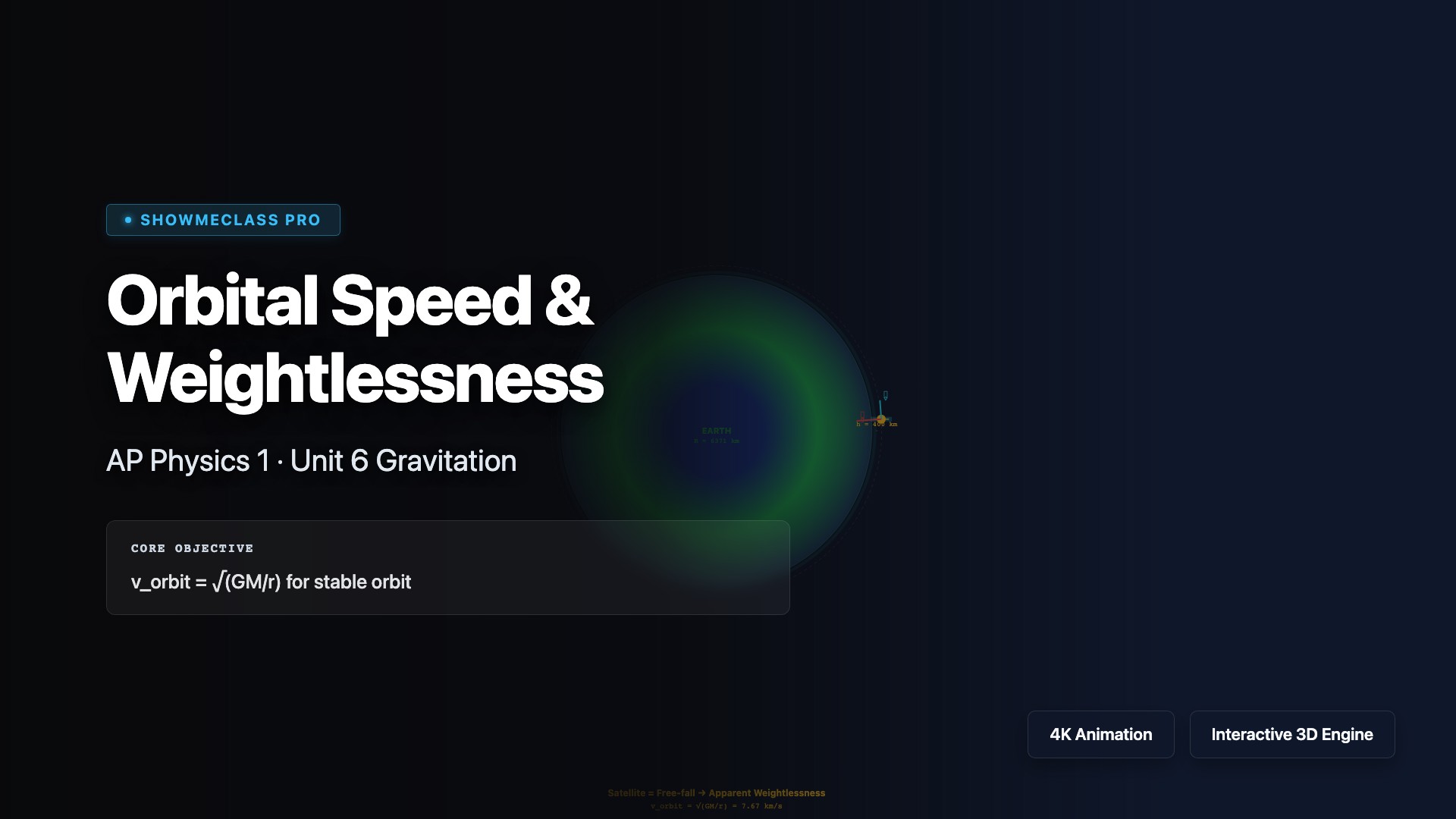
Orbital Speed & Weightlessness
Animated satellite orbiting Earth. v_orbit = √(GM/r). Adjust altitude from LEO to GEO to see speed, period, and local g. Free-fall = apparent weightlessness.